

What choosing to walk the Camino has taught me before I ever leave home.
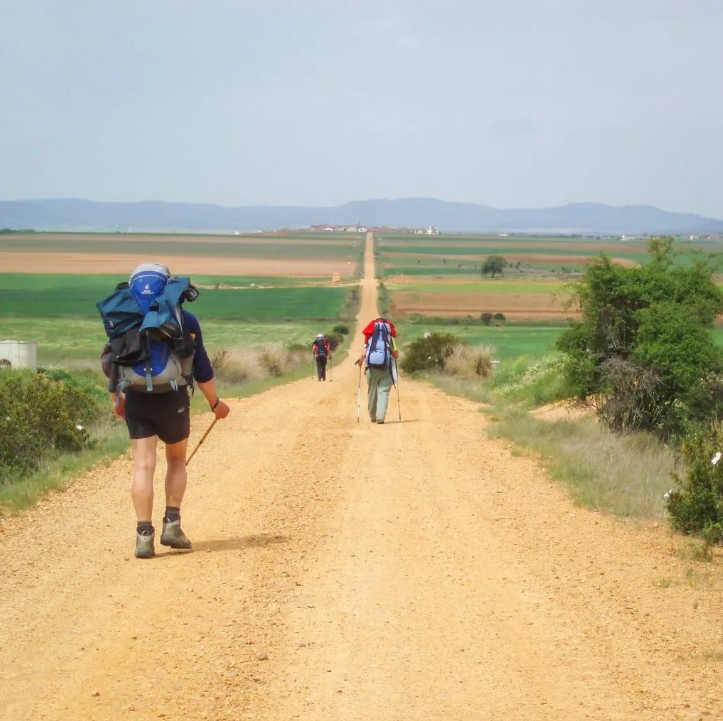
In a few days, I’m crossing a threshold I’ve imagined crossing for over twenty years: the start of the Camino Francés, the ancient pilgrim road across northern Spain. I hope to walk four hundred kilometers of it, from Burgos to Santiago de Compostela.
I want to tell you what it’s actually taken to get here.
A pilgrimage is not a vacation
A vacation moves you away from what’s hard. A pilgrimage moves you toward it, on purpose, because you’ve decided something on the other side is worth the discomfort of getting there.
I could fly to Santiago tomorrow — direct flight, connect through Madrid, standing in the cathedral square by dinner. Nobody would think less of me. But flying was never the point. The walking is the point. Because a pilgrimage isn’t a destination you arrive at — it’s a devotion you practice.
Ernest Holmes put it more plainly than any pilgrim guidebook: “Seek to make your work a prayer, your believing an act, your living an art. It is then that the object of your faith will be made visible to you.” Devotion isn’t a feeling you wait around for. It’s a practice you return to, one ordinary day at a time.
Twenty years of almost
I’ve longed to walk this Camino for over twenty years; twenty years of living vicariously through other people’s photos and stories, yearning to be on that path and not really understanding the why of my longing. Last year I finally stopped saying someday and started planning.
Then I began to doubt. I doubted I could get away. I doubted I could afford it. I doubted I’d be supported. And underneath all of it, I doubted I could physically endure it. I mean after all I’ll be walking for miles each day, for 6 weeks, in my sixties, with twenty pounds on my back.
The hardest doubt was the one about support. More than one friend has called this trip a personal vacation — time off I’m entitled to, mine to spend however I like. I understand why it looks that way. But I don’t experience it that way. For me, this walk isn’t separate from my calling; it’s part of it — the same kind of deepening I once pursued as a professional accountant, keeping current in a field through continuing education. However, what I’m renewing here isn’t my license to minister… it’s my own capacity for devotion. And that indeed is the road less traveled: sometimes one chooses it even when the people around you don’t fully understand it, because deep down, you know it’s yours to do, you trust it… it truly is a calling.
Each of those doubts was grounded in something real. I didn’t get past them by fighting or avoiding them. I got past them by leaning on something larger than my own resolve. I tried to remember that God doesn’t call the prepared. God prepares the called. And I was definitely being called.
What discipline actually does
M. Scott Peck opens The Road Less Traveled with: “Life is difficult.” Not very inviting, yet he goes on to write that once we stop fighting that fact we stop wasting our energy on resisting the hard thing — and we can finally use that energy to move forward.
His real point is that discipline and grace aren’t opposites. Grace doesn’t show up instead of the disciplined life. It shows up inside it. Every time I sat with a doubt and kept preparing anyway — booked the flight, tested the boots, sorted out coverage while I’m gone — that was the discipline. Grace met me on the inside of my discipline. It didn’t remove the doubt. It walked alongside it.
Choosing to be present with the Sacred is not always easy. Some days it costs you your comfort, your certainty, your plans. But it changes everything. And it’s so very worth it — not the way a good vacation is worth it, but the way the truest things in your life have been worth it: the relationship you fought for, the sobriety you chose one more day, the calling you said yes to before you felt ready.
Your own road less traveled
Most people reading this aren’t walking to Santiago. But I’d be doing you a disservice if I only wrote about my upcoming trip.
Where is your road less traveled? It might not be four hundred kilometers. It might be the fifteen minutes of quiet you keep skipping. The honest conversation you keep stepping over. The decision you already know is right, if you’d stop talking yourself out of it.
The Camino didn’t create my devotion — it’s just going to make it visible, one step at a time, for thirty-some days. Yours is already doing the same quiet work in you. The question isn’t whether you have a road less traveled. You do. The question is whether you’ll keep choosing it on the days it doesn’t feel inspiring anymore.
If the days go the way I’ve planned them, I’ll arrive in Santiago on my sixty-fifth birthday. I can’t think of a truer way to spend a birthday than finishing something I’ve longed to do for the last twenty years.
May we each keep choosing the harder, truer path, the road less traveled — not because it’s easy, but because we’ve said yes to reaching past our doubts and our resistance toward the more sacred and the divine — that something we’ve been longing for that is worthy of our effort and our passion.


Your sharing reminds me of a quote I heard from a local church I visited yesterday in Kansas. “Turning my eyes on Jesus doesn’t mean I stop seeing my problems, it means my problems are no longer the only thing I see.” Wishing you fortitude and grace in your journey!! And Happy Birthday!!!
Rev. Alice:
Buena Ventura on your inspired trip!
Your description of the pilgrimage and reasons for doing it were beautiful. Thanks for sharing them in writing.